Showing posts with label online stock trading and investments. Show all posts

Wednesday, November 17, 2010

managing personal finances


A survey released today by Javelin Strategy & Research, which serves financial institutions, found in August that nearly one in five Americans doesn't monitor or manage their personal finances. That rate is double what it was just a year ago. Despite the fact the recession has made it more important than ever to carefully track our money, when it comes to personal finances, 19% of Americans stuck their head in the sand. A year before, another survey had the figure at just 8%.


More anxiety-induced news: The percentage of Americans who say they sometimes log onto their checking account balances with their banks' websites dropped to 46%, down 13 points from 59% a year ago. Even those who track their money by pen and paper dropped, from 50% to 46%.


"It's a natural human reaction to stress: 'Maybe if I don't look at it, it will go away.'" explains the study's co-author, senior analyst Mark Schwanhausser. "I think you have fewer people checking their finances online because they don't like what they're seeing. 'I'm going to be a financial sleepwalker. I'm not going to look.'"


Schwanhausser's prescription for the problem involves convincing America's major financial institutions that they're doing a lousy job helping make it easier and less stressful for their customers to track their money. "It's not enough to tell you how to fix the toilet," he says. "You've got to have the wrench."


Yet despite the fact that most Americans' money resides at a bank, few banks are interested in furnishing financial planning tools. Right now, Schwanhausser argues, most people are required to log into a wide variety of websites to track their money. For example, 75% of Americans who have a credit card get it from somewhere other than their primary bank, meaning their finances are scattered across many websites, unreconciled.


When people do turn to their bank's websites, he argues, the financial planning tools are nearly non-existent despite the fact our society increasingly demands greater personal control through technology. "Today's online banking is like having avocado green appliances from the 1970s. It just doesn't cut it," says Schwanhausser.


Schwanhausser is using the survey to convince banks that it will actually endear customers to them if they put personal finance tools front and center on their sites, helping customers paint a clear picture of their own financial habits. He's pressing them to develop systems, both on the Web and through mobile apps, that can draw in customers' information from other sites, such as credit cards and mortgage lenders, so financial care-taking can be a one-stop process.


So far, banks and lenders have been slow to use existing technology to make money management a less daunting chore. Part of the issue is that many banks don't want to acknowledge competitors by drawing in account balances from elsewhere. Banks also stand to make money off poor financial planning through penalties and fees. Like a doctor who makes money off treating disease, promoting financial good health does not on the surface appear to be in a bank's best interest.


"You can't manage what you don't measure," says Schwanhausser. "And if the bank's not going to provide it for you, you have to go get it in other places."


He recommends existing aggregators such as Mint.com, which pulls your data from multiple sources and lays it out in spreadsheets and in spending plans, as a model for what all the banks should be doing for their customers.


He also notes that Bank of America's "My Portfolio" and Wells Fargo's "My Savings Plan" are two fledgling, if little-known, bank-created features that are slowly reaching toward the sort of comprehensive personal finance planning features he advocates.


As long as it remains difficult or scary, though, when it comes to their finances, Americans will remain more likely to use the Ostrich Method.

In the digital age, nobody likes carrying a lot of cash around – I know I don’t, anyway. This can be especially frustrating when you go to keep track of your expenses, who you owe money to, who you lent some to and just where it all goes over the month.

As always, there are a lot of apps out there to help you do various things with your money. There are apps to figure out how to manage your money, oversee expenses, send money to people, keep track of who owes you, and more.

In this article, I’ll show you some of the applications you can take advantage of to do everything I’ve mentioned here, leaving you free to pick and choose the apps that will make your life easier.

id="more-58352">

How to Manage Your Money

I’m beginning to learn just how difficult managing your expenses can be. For the most part, I use my debit card tied to my checking account to make purchases. I use it at the grocery store, when I go out to lunch with my coworkers and on the weekend when I’m out exploring the city.

At the end of the month, my bank statement looks pretty ridiculous. All of these small transactions make it difficult to sift through. I still know what everything is, but if I wanted to see where I could be saving some money I wouldn’t know the first place to look.

Sounds like you? Even if it doesn’t, you could still reap the benefits of visually being able to manage your money. These apps make the process a lot easier.

Mint

style="text-align: center;">

Mint has been on our radar since back in 2007 when Karl wrote about it. Plain and simple, if there is one app I want you to keep in mind it’s this one.

Mint is a free personal finance application that can help you compare your bank accounts, credit cards, CDs, brokerage and 401(k) to the best products out there. It offers a visual representation of your finances and is very easy to set up. Use it to manage your budget, get credit card advice and understand investing.

Here’s a great video showcasing an overview of Mint’s features:

For some helpful tips on how to use Mint, check out Bakari’s article on How To Use Mint To Manage Your Budget & Spendings Online.

Thrive

Thrive (directory app) is also a great application if you’re looking for a simple way to keep track of your spending. With Thrive, you get an overall Financial Health score, which is one number that shows you how financially fit you are. It also shows you scores in other areas and offers you advice on how to make improvements.

style="text-align: center;">

Thrive breaks down your spending for you and shows you where you can save. Compare your current budget to last month’s, as well as view a six month average and target budgets to follow.

Texthog

Looking for an even simpler way to track expenses? Texthog (directory app) lets you easily store, organize and access your receipts, expense reports and more via text message, the web, your email, iPhone and even Twitter.

style="text-align: center;">

A Texthog free account gives one user the ability to track expenses, view unlimited reports and get budget/bill reminders. Take a photo of your receipts and utilize tags and categories to keep track of everything.

To check out Texthog on your iPhone, you can find the application on iTunes.

Venmo

Speaking of text messages, have you heard of Venmo? Venmo (directory app) is a nice little app that lets you pay and charge friends with your phone. Send and receive secure payments by linking your card to your account. This allows you to settle small loans you give/get by eliminating paper transactions for small amounts of money.

style="text-align: center;">

To use Venmo, all you do is create an account. You can then send and receive money to other accounts simply by using text commands in SMS. Accept a “trust” request from your friends and make transactions without having to authorize them by texting a 3 digit code.

This is a pretty solid application that I have been using a lot lately with my friends/coworkers. It’s great for when a bunch of you are out to lunch and not everyone has cash on them. “I’ll just put it on my card and Venmo you all afterwards.”

Owe Me Cash

style="text-align: center;">

Owe Me Cash is a nice app I found recently that is also very easy to use. If someone owes you money, you just sign into Owe Me Cash with your Twitter, Facebook, OpenID, or regular account and tell the app about the debt. The app will send automatic reminders to those that owe you money by phone, text and email, so you can get paid!

This app is more fun than serious, but it doubles as an easy way to keep track of who owes you what. Let the app bug your friends to pay you so you don’t have to do it yourself – it’s a win-win.

Conclusion

With these applications, your finances will never look better. Say goodbye to paper money and change.

What do you think of these money-managing applications? Will you be using any of them?

Image Credit: marema


alpine payment systems scam

autosport.com - F1 <b>News</b>: F1 closing on HD coverage for 2011

Formula 1 is close to giving the final green light for High Definition television coverage of the sport to begin from the first race of the 2011 season, AUTOSPORT has learned.

The Inevitable Taiwanese <b>News</b> Animation about the TSA&#39;s Touching <b>...</b>

Does anyone know if this animation, or any of these CGI clips from NMA.tv, actually appeared on TV news in Taiwan? Because their website seems more like it's mostly an online thing - I would love to see video of this actually being ...

Video: Is Cable <b>News</b> Actually <b>News</b>? - NYTimes.com

Video: Pondering the value and integrity of cable news.



MABUHAY ALLIANCE HOST THE 6TH ANNUAL ECONOMIC DEVELOPMENT CONFERENCE by mabuhayalliance


autosport.com - F1 <b>News</b>: F1 closing on HD coverage for 2011

Formula 1 is close to giving the final green light for High Definition television coverage of the sport to begin from the first race of the 2011 season, AUTOSPORT has learned.

The Inevitable Taiwanese <b>News</b> Animation about the TSA&#39;s Touching <b>...</b>

Does anyone know if this animation, or any of these CGI clips from NMA.tv, actually appeared on TV news in Taiwan? Because their website seems more like it's mostly an online thing - I would love to see video of this actually being ...

Video: Is Cable <b>News</b> Actually <b>News</b>? - NYTimes.com

Video: Pondering the value and integrity of cable news.


alpine payment systems scam

autosport.com - F1 <b>News</b>: F1 closing on HD coverage for 2011

Formula 1 is close to giving the final green light for High Definition television coverage of the sport to begin from the first race of the 2011 season, AUTOSPORT has learned.

The Inevitable Taiwanese <b>News</b> Animation about the TSA&#39;s Touching <b>...</b>

Does anyone know if this animation, or any of these CGI clips from NMA.tv, actually appeared on TV news in Taiwan? Because their website seems more like it's mostly an online thing - I would love to see video of this actually being ...

Video: Is Cable <b>News</b> Actually <b>News</b>? - NYTimes.com

Video: Pondering the value and integrity of cable news.


Friday, September 24, 2010

personal finance money management


Ever since Jane Mayer's recent New Yorker piece earlier this month, much of the media has risen to debate how much influence conservative and libertarian-leaning businessmen David and Charles Koch, the owners of Koch Industries, have in American politics.

Some critics of the article argue that the media cries foul over the Koch brothers, yet largely ignores liberal George Soros, the Hungarian-American currency speculator and stock investor, who has spent millions of dollars on liberal and nonpartisan causes (including the Center for Responsive Politics).


OpenSecrets Blog is here to investigate the numbers behind these bold-faced names in our new feature, Capital Rivals.

For starters, both Soros and the brothers Koch (pronounced "coke") are incredibly rich. And their political endeavors are numerous.

Koch Industries, an oil refiner, is the nation�s second largest private company with about $100 billion in annual revenue. Soros is chairman of Soros Fund Management, a highly successful hedge fund that has provided financial and investment strategies to a variety of funds. As of June 30, 2009, the hedge fund had holdings valued at $4.2 billion.

David and Charles Koch are tied at No. 24 on Forbes top billionaires list with a personal fortunes of $17.5 billion each. Soros is No. 35 on the list with a net worth of $14 billion.

The Koch brothers, Soros and their respective companies have spent millions of dollars on politics, ranging from federal lobbying to candidate support to bankrolling political committees, according to a Center for Responsive Politics review of their political activity.

The Kochs and Soros have also funded think tanks, foundations and political organizations -- money that is sometimes notoriously difficult to track.

These individuals aren�t exactly flying under the radar as the Kochs hold leadership positions and are featured on the websites for the Cato Institute, Reason Foundation and the Mercatus Center among others. Soros also runs the Open Society Institute -- website Soros.org -- as well as the recently created Institute for New Economic Thinking.

Still these individuals have provided major funding to groups that aren't particularly transparent, such as Soros-backed Democracy Alliance, which doesn't provide information on the projects it funds.

David Koch's Americans for Prosperity Foundation has a more detailed website, but it is unclear why Koch is seemingly uninvolved in the similar organization, Americans for Prosperity. David Koch contends that no Koch foundations have provided funding to Americans for Prosperity, the citizen advocacy group organizing Tea Party events around the country. A Washington Post article from January of this year connects the Kochs with the Tea Party movement, citing records of their foundation giving $3.1 million to Americans for Prosperity, but according to the Kochs, this is false, as the money only went to the Americans for Prosperity Foundation.

Below is the Center for Responsive Politics' analysis federal political activity by Soros and the Kochs. Note that while direct political donations are relatively easily to track, it's difficult to create a full compilation of the political groups that these individuals are connected with due to secondary and indirect affiliations. Therefore, the groups listed at the end of the are the most well-known organizations linked to these three individuals.


big white booty research

Expats talks <b>news</b> over booze - RT

This week, Moscow's expats share their impressions of the stories that made the news, including the Arctic Forum, Pakistan's floods and the Art Moscow Fair.

<b>News</b> Roundup: &#39;Big Bang Theory&#39; is a Thursday Ratings Hit, Bret <b>...</b>

In Thursday night's ultra-competitive TV landscape, several shows managed to break away from the pack. According to The Hollywood Reporter, 'The Big B.

Small Business <b>News</b>: An Owner&#39;s Manual

If only there were an owner's manual that came with your small business telling you what works, what doesn't and what are the best ways to move ahead in your.


Expats talks <b>news</b> over booze - RT

This week, Moscow's expats share their impressions of the stories that made the news, including the Arctic Forum, Pakistan's floods and the Art Moscow Fair.

<b>News</b> Roundup: &#39;Big Bang Theory&#39; is a Thursday Ratings Hit, Bret <b>...</b>

In Thursday night's ultra-competitive TV landscape, several shows managed to break away from the pack. According to The Hollywood Reporter, 'The Big B.

Small Business <b>News</b>: An Owner&#39;s Manual

If only there were an owner's manual that came with your small business telling you what works, what doesn't and what are the best ways to move ahead in your.


big white booty

Expats talks <b>news</b> over booze - RT

This week, Moscow's expats share their impressions of the stories that made the news, including the Arctic Forum, Pakistan's floods and the Art Moscow Fair.

<b>News</b> Roundup: &#39;Big Bang Theory&#39; is a Thursday Ratings Hit, Bret <b>...</b>

In Thursday night's ultra-competitive TV landscape, several shows managed to break away from the pack. According to The Hollywood Reporter, 'The Big B.

Small Business <b>News</b>: An Owner&#39;s Manual

If only there were an owner's manual that came with your small business telling you what works, what doesn't and what are the best ways to move ahead in your.


We love Quizzle! by QuizzleTown


We love Quizzle! by QuizzleTown


managing your personal finance


A lot of people are unemployed in this country, 14.9 million as of the latest BLS release a couple of days ago, and for some of those people, this has become what is coyly referred to as ‘the entrepreneurial moment’, the ‘ah-ha’ light-bulb realization that if they don’t create a job for themselves, there will be no job, no income, no mortgage payment, no groceries, no light, no heat, no gas for the car, nuthin’. Since 2008, over 5 million jobs have been lost, many of which will never, ever come back.


Welcome to Labor Day, 2010.


Some of these ‘lost’ jobs have been outsourced overseas. Some have just been cut. Some companies are using their cash to invest in technologies which will insure that they will never have to hire these folks back, at least not with the skills that they had when they were given a cardboard box and five minutes to empty their desks and get out the front door.


If there are people out there who have or are considering building their own ‘life raft’ it would surprise absolutely no one; though for some folks, entrepreneurship is so scary, they can’t imagine anything other than hiring on to someone else’s deal, no matter how horrible it is.


Sometimes, though, you don’t have any choice. One thing to remember, is that many of the most successful entrepreneurs in this country have not invented fuel cells, high tech photovoltaic films, high speed transit, a cure for cancer (or the common cold), or the answer for peace in our time. They are cleaning houses, making pizza, fixing computers/ipods/iphones/cars/furnaces/plumbing/household electric, managing other people’s systems, giving advice, making clothing for people who are outside the common size ranges in the stores.


Not exactly operating a basement boiler room financial situation, doing crazy financial stuff, or stirring up the pot on international finance.


At its most basic, it’s local; at its most interesting, it might even be regional. But it is still person to person; it’s still me doing business with you. Face to face. My hands and brain doing stuff to help you. Some of this is amazingly low tech – some of it is almost medieval.


This week’s fascinating story comes from the New York Times about a family of knife sharpeners who have thrown a new curve on this ancient of trades by providing two sets of knives to butchers, restaurants, food services (in Yankee Stadium, for heaven’s sake), and calling on a weekly basis to pick up the used set and providing the newly sharpened set.


Anyone who does any real work in a kitchen at all knows that your most important tools are a good set of knives and a good frying and sauce pan. With those three things, you can do almost anything (and yes, I have made cookies in the bottom of a frying pan; thank you for asking), but if your knives are dull, cutting anything becomes horrible work and you can injure yourself badly. “Every week, the company visits more than 800 clients and collects more than 8,000 knives to be replaced with freshly sharpened blades. The service costs $2.50 to $3.50 per knife.


The business started servicing mainly butchers and meatpackers, in territories handed down from father to son. To preserve the business for his children, Mr. Ambrosi expanded it to restaurants and even Yankee Stadium, in some cases deviating from long-held tradition. Many cooks and chefs take personal pride in their knives and their ability to maintain them, and would hesitate to release them to anyone else’s care. But sharpening a knife takes time and skill — and not every chef has both.”


Having a skill and honing (sorry) that so that you can provide something that someone else can not (or will not) do, whether it is being an electrician, a plumber, a welder, a knife sharpener, a shoe repair shop, a hair dresser, whatever it is – can make the difference in today’s international economy between being able to make a living for your family and holding your head in your hands. One of America’s biggest mistakes as far as education is concerned (and others might just argue with me) is that we “jumped the shark” in terms of absorbing people coming out of colleges.


Since the 1980s, kids coming out of college have had fewer and lower level opportunities. Jobs which absorbed high schoolers, now require a 2 or 4 year degree; job that required a college degree started to require a masters degree; some jobs which required a college degree and some internal training, now require advanced degrees – I even know of jobs that now require a legal degree to be hired which 30 years ago required a college degree and passing a test. So much emphasis was placed on going to college – and vocational training and the trades were so downgraded and derided that any family with a kid with two brain cells to rub together would not even THINK of encouraging that kid to go into the trades, unless the family was already in the business.


We’re now at a situation where companies, which shot themselves in the foot by sending skilled jobs overseas and now want to bring them back because costs overseas have risen and/or they are tired of their intellectual property being stolen and sold to others, can’t find the skills they want. Not to put too fine a point on this – those same companies have not done any training themselves; nor are they willing to do so. They got into the habit a long time ago of pushing the investment in training off on others. The government for one.


The other, which has willingly and consistently provided training in the trades for years are the unions. Organized labor. The Great Satan of the industrial world. The guys everyone loves to hate. The organizations which, according to many employers, stand in their way of succeeding in business.


But still, the organization which has kept skills alive in this country despite outsourcing, overseas sourcing, attacks from business and government, and general antipathy from great swaths of the American population in certain parts of the country.


So. On this frankly very sad Labor Day, 2010, I’d like to thank the American Labor Movement for remembering what America and Americans do best and what we need to do on an increasing basis if we are to put people back to work – or if we are to have businesses to call our own: Do stuff with our hands.


Thanks folks. You’re not perfection, but you’re willing to invest in Americans.


Happy Labor Day


Are you a fan of the GTD personal productivity system? Well if you like "Getting Things Done," here's GFD, Getting Finances Done, which shows you how to map David Allen's same principals to managing your personal finance and achieving your financial goals.


Applying GTD principles to your personal finances - Part 1 [Getting Finances Done]


big white booty.com

ICM And WME And CAA <b>News</b>… – Deadline.com

ICM's talent department signed Emmy nominee and TV standout (Malcolm In The Middle) Jane Kaczmarek, who had been represented by WME. She's managed by Adena Chawke and Lisa Wright at Greenlight Management. Also joining ICM from WME is ...

Bad <b>news</b> for green technology | Watts Up With That?

Super magnet production has also been shipped over to China http://www.chinamagnet.in/i-News-229212/The-development-and-applications-of-Rare-Earth-Permanent-Magnetic-Materials-244616.html. Over the last 10 to 20 years companies have ...

BREAKING <b>NEWS</b>: Lindsay Lohan Ordered Back To Jail; Bail Revoked <b>...</b>

Lindsay Lohan is going back to jail. In a stunning move, Los Angeles Superior Court Judge Elden Fox threw the book at Lohan Friday morning in Beverly Hills, revoking her bail and ordering her back to jail. PHOTOS: Lindsay Lohan Arrives ...


ICM And WME And CAA <b>News</b>… – Deadline.com

ICM's talent department signed Emmy nominee and TV standout (Malcolm In The Middle) Jane Kaczmarek, who had been represented by WME. She's managed by Adena Chawke and Lisa Wright at Greenlight Management. Also joining ICM from WME is ...

Bad <b>news</b> for green technology | Watts Up With That?

Super magnet production has also been shipped over to China http://www.chinamagnet.in/i-News-229212/The-development-and-applications-of-Rare-Earth-Permanent-Magnetic-Materials-244616.html. Over the last 10 to 20 years companies have ...

BREAKING <b>NEWS</b>: Lindsay Lohan Ordered Back To Jail; Bail Revoked <b>...</b>

Lindsay Lohan is going back to jail. In a stunning move, Los Angeles Superior Court Judge Elden Fox threw the book at Lohan Friday morning in Beverly Hills, revoking her bail and ordering her back to jail. PHOTOS: Lindsay Lohan Arrives ...


big white booty

ICM And WME And CAA <b>News</b>… – Deadline.com

ICM's talent department signed Emmy nominee and TV standout (Malcolm In The Middle) Jane Kaczmarek, who had been represented by WME. She's managed by Adena Chawke and Lisa Wright at Greenlight Management. Also joining ICM from WME is ...

Bad <b>news</b> for green technology | Watts Up With That?

Super magnet production has also been shipped over to China http://www.chinamagnet.in/i-News-229212/The-development-and-applications-of-Rare-Earth-Permanent-Magnetic-Materials-244616.html. Over the last 10 to 20 years companies have ...

BREAKING <b>NEWS</b>: Lindsay Lohan Ordered Back To Jail; Bail Revoked <b>...</b>

Lindsay Lohan is going back to jail. In a stunning move, Los Angeles Superior Court Judge Elden Fox threw the book at Lohan Friday morning in Beverly Hills, revoking her bail and ordering her back to jail. PHOTOS: Lindsay Lohan Arrives ...


Tinker, Tailor, Stoner, Spy   ~   Timothy Leary by Vernacula


Tinker, Tailor, Stoner, Spy   ~   Timothy Leary by Vernacula


Saturday, September 18, 2010

personal finance planning


I've read a lot of stores lately about "credit score enthusiasts" who want to get the perfect credit score or are obsessed with improving their score. While it's certainly better than not caring about your credit score at all, it almost never pays to get a perfect score.


Despite all the stories about the odd ways your score is being used, the reality is that once you have a good credit score, you don't need to obsess about it.


Consider this - if your score is better than 760, then Fair Isaac Corporation, the company that invested the credit score formula; says you get zero benefit from improving it. For mortgage interest rate purposes, a 761 is the same as an 850. For auto loans, the bar is even lower. If you have a score about 720, it's the same as having a perfect score of 850. Visit their site and look in the right hand column - there's a table listing FICO scores and APRs for 30-year fixed mortgages, 15-year fixed mortgages, and 36-month auto loans.


If you are planning on getting a loan in the next year or two and your score is close to the next tier, by all means try to improve it. If you aren't planning on getting a loan and you have a decent score, focus your energies on something else. I assure you that you will get a better return doing something other than obsessing about your credit score.


Jim writes about personal finance at Bargaineering.com.


When Crepes Bonaparte was first approached by the Food Network to participate in the Great Food Truck Race, in which seven acclaimed food trucks compete for the highest sales in various cities across America (and a grand prize of $50,000), Murcia jumped at the chance to compete against some of the other well-known trucks from across the country. As Murcia puts it, “It was an opportunity to test our abilities against some of the most successful food trucks out there.” Spoken like a true competitor. Of course, arriving on the first day of the competition to be greeted by famed chef Tyler Florence was no doubt an exhilarating experience for the show’s contestants. Murcia recalls, “We were a little nervous because it was a little intimidating. You know…you show up, and there’s Tyler Florence!”


Two of the six Great Food Truck Race episodes have aired to date. The first episode took Crepes Bonaparte and the competition to San Diego, California, where Murcia had his first taste of the challenges that were to come: “We were thrown into an environment of, ‘OK, you’re going to San Diego…GO!’ so it was very rushed to figure out what to do. We were planning literally as we were on our way to San Diego.” Murcia also recalls the challenges met in the second episode’s trip to Santa Fe, New Mexico: “We ran out of food like three times, so we had to keep buying more food! It’s tough to know how many people to prep for when you’re in a place where you don’t know what your sales are going to be.”


One can’t help but wonder how the dynamics were between the contestants off-camera in such a competitively-charged atmosphere while on the show. Murcia explains, “When we were selling, we were competitors. We didn’t talk at the end of the day about who had done what in terms of sales…but we’re all great friends. We all got to try each other’s food, and it was all delicious.”


Also featured on the show as a key member of team Crepes Bonaparte is Murcia’s then-fiancĂ© Danielle. Now married, Murcia jokes, “We spend more time together as a couple than I think any other couple out there.” Despite the long hours logged side by side, the duo works very well together. Murcia explains, “I’m more the numbers, finance guy who has to do all the paychecks, HR, and permitting, and Danielle is very much our marketing and operations person. Because we work so much, it’s a great way to spend that time together.”


Of course, operating a food truck presents its own challenges, television show or not. The most challenging aspect of the business for Murcia is simply working within such a small physical space. Murcia explains, “Dealing with a small kitchen and operating a full service catering business out of here as well is the biggest challenge. We are constantly dealing with never having enough refrigerator space, and having to get creative with how to position things in the fridge and make it work.”


Challenges aside, Crepes Bonaparte has benefited from the exposure gained through the show, if not a few borderline-obsessed fans. Murcia laughs, “We do a farmer’s market in Anaheim, and one lady literally shoved her cell phone in the truck and was like, ‘I have to take a picture of you!’ I thought, ‘Whoa, that’s a first!’ When people come by the truck who have seen the show and say, ‘Oh, I’m rooting for you guys,’ it has made our work environment that much more fun.” Call it irony, but Murcia has yet to watch any of the episodes of the Great Food Truck Race. “I don’t have cable!” he confesses.


Murcia first conceptualized Crepes Bonaparte as an undergraduate student at the University of Southern California. Lacking the big dollars required to open a full fledged restaurant, Murcia first operated Crepes Bonaparte as a catering firm specializing in crepe stations, with the hope of evolving into to a restaurant in the future (catering still comprises 30% of the business). Of course, given the popularity and expansion of the food truck industry over the past few years, Murcia is content with current operations: “As of now, I plan on staying with the food truck, and just seeing it out because it’s still such a new trend. We don’t really know exactly where it’s going…we’re all learning.”


Behind the beret, Murcia is a businessman with a passion for providing customers with crepes just the way they are in France: “simple, cheap, and on-the-go.” Murcia reflects, “Every time I see a Yelp or blogger review about us, I feel like we’ve done that part right. So I think that’s the most rewarding part of the business. Even though I have these ideas of how I want my business to look in my head, the consumer gets it, and it reminds me that OK, I’m doing what I meant to do.”


Maryn Nelson Moslenko is an OC-based food blogger who writes Le Cupcakerie. The Great Food Truck Race airs Sundays at 9 on the Food Network.


eric seiger do how to lose weight fast penis extender

Scripting <b>News</b>: Yes, Virginia, there are two ways to read RSS

The kind of flow almost everyone agrees is suited to River of News are feeds from news orgs like Reuters, the BBC and Guardian, AP, the Washington Post. They're constantly publishing links to stories, many of them different views of the ...

Would You Pay for Online <b>News</b> Content? « Internet Nut

It cannot be denied that newspaper circulation and the rate of real media advertising is on the decline. As more and more people turn to modern technology and.

Baltimore Crime: Saturday crime <b>news</b>

Saturday crime news. State Senator Ulysses Currie pleaded not guilty to federal corruption charges. Triple stabbing on an MTA bus in West Baltimore. posted by ppatin at 11:07 AM ...


 by Julia Delligatti


Tuesday, September 14, 2010

personal finance money management

This post is from staff writer Sierra Black. Sierra writes about frugality, sustainable living, and getting her kids to eat kale at Childwild.com. This post is part of Book Week at Get Rich Slowly.


Since my twin victories of paying off our last credit card and funding a summer of travel, my husband has begun to show interest in personal finance.


It’s not that he wasn’t supportive of my efforts before — he just preferred to support them from a safe, ignorant distance. A distance from which I handed him an envelope of cash each week to do the grocery shopping, he didn’t ask too many questions, and somehow we were climbing out of debt. He was more than happy to adopt any frugal-living strategy I suggested, as long as he didn’t have to think about the Big Picture.


That system worked, but I longed for more active participation from him. Not only because I wanted us to share equally in the journey toward financial freedom — I do want that — but also for a selfish reason. I wanted him to participate because he’s better at this stuff than I am. He’s a whiz at spreadsheets. The man has a Ph.d in Physical Chemistry. You don’t get one of those without doing a few math problems.


Lately, I’ve been getting my wish. My husband has been talking with a financial advisor at the university he works for, and having clear, honest conversations with me about our money.


This seemed like the perfect time for me to read Mary Hunt’s How to Debt-Proof Your Marriage.


Relationship first

Hunt’s book covers the basics of personal finance and debt destruction, with a special focus on doing it as a couple. Before she even begins talking about financial management, Hunt talks about strengthening the foundations of your marriage. You can’t have financial harmony without emotional intimacy, she says.


I couldn’t agree more. It’s clear in my own marriage that spending time relaxing together on vacation helped my husband and me both chill out and have better conversations during our family finance meetings too.


Hunt and I part ways in the chapters about how to achieve that emotional intimacy, though. She bases her prescription for marital bliss on traditional gender roles. She includes chapters for each sex on how to make deposits in the other’s Love Bank — a metaphorical bank of goodwill made of small, loving gestures.


The Love Bank is an adorable idea, one I’m tempted to put into practice here in my own home. I’m pretty sure I won’t be making my deposits to my husband’s Love Bank by biting my tongue when I disagree with him, though. Likewise, I don’t expect him to express his love for me by bringing me flowers and handling all the tough decisions for me like the natural leader of our family should.


Hunt is a generation (or two) older than I am, and what works for her marriage is so foreign to my young, feminist mind that it was actually a little hard to read. But leaving aside the details of how you get to an intimate marriage, though, she and I agree wholeheartedly that it’s important to get your emotional needs met before you can effectively work together with your spouse to manage your finances.


Money second

The personal-finance half of the book will be familiar to most GRS readers. Hunt advocates an approach similar to Your Money or Your Life and Dave Ramsey’s Total Money Makeover, one that begins with calculating your net worth and tracking your expenses. From there, she covers the basics of setting up an emergency fund, creating a spending plan, and starting a debt snowball (though she uses different terms for these steps).


Like her ideal of a healthy relationship, Hunt’s financial advice seems a little dated in places. A lot of it has to do with how to organize your three-ring binders, or how to painstakingly accomplish by-hand calculations that Mint can do for you in a few minutes. If you’re a devotee of the pen-and-paper approach, though, her chapters on how to track and plan your spending are rock solid and detailed enough to easily follow.


The one thing in this book that made me want to put it down, run to my office, and implement it on the spot was, in fact, her filing system. Hunt takes a few pages to go over exactly what personal records you should be keeping, and outlines an elegant effective way to organize them. I spent an hour tearing apart my filing cabinet yesterday as soon as I read those pages. I may not want my marriage to look much like hers, but I’m delighted to have made over my filing cabinet in Mary Hunt’s image.


Different views

There are a few areas where Mary’s financial advice deviates from the usual Get Rich Slowly formula. One is the matter of the debt snowball. She encourages readers to start saving 10% of their income towards an emergency fund immediately, while still paying the minimums on their credit cards. Only after saving up a fully funded six-month emergency fund would Hunt advise you to roll those savings into your credit card payments.


Given the relative interest rates on credit cards and savings accounts, this approach will almost certainly cost you money. If it works for you psychologically, though, by all means pursue it. No matter what order you do them in, the key steps of tracking your spending, creating an emergency fund, and snowballing your debt payments will lead you to financial security.


Another place where she breaks with conventional wisdom is in her savings and spending ratios. GRS readers are familiar with the Balanced Money Formula that encourages us to use 50% of our money for living expenses, 30% for fun and 20% for savings. Hunt advises 10% for giving, 10% for saving and 80% for spending.


The order of those percentages is vital to her. A devout Christian, Hunt feels that all the money that comes into your life is a blessing from God, and promptly giving 10% of it back to God shows you can be trusted with this blessing, and more of it will come your way.


I’m not a Christian, but I admire Mary’s faith and devotion to charitable giving. It’s a goal of mine to give 10% of my income. I’ve written about that here before, and readers made a persuasive case for waiting until my debts were paid before giving so much away. For now, I give a modest amount and look forward to giving more in the future.


I think that for Hunt, the psychological benefits of giving 10% and saving 10% before you make any spending decisions at all outweigh the financial benefits of paying off your debts as fast as possible and then beginning to accumulate and donate wealth.


It’s an interesting approach, and one that might work for a lot of people. Particularly if you’re a devoted Christian and looking for a personal-finance book that reflects your values, you’ll find a lot of good in How to Debt-Proof Your Marriage. If you’re looking for a book that’s totally focused on financial savvy and relationship skills, though, this might not be your best bet.


If you are having a tough time understanding the nitty gritty of your mortgage, like the total interest you’ll end up paying and the monthly payments you’ll need to make, then you might as well use this simple web based tool called the AmortizationLoanCalculator.

It asks you for the principal loan amount, the loan term and the annual interest rate and returns a table that’s an amortization schedule showing your periodic payments, what part of it is going towards paying the principal and the interest, and the overall interest you pay in the lifetime of the mortgage.

As you can see in the above screenshot, the table is pretty easy understand. The C Prin and C Int stand for cumulative principal and cumulative interest respectively.

Features

  • Online calculator for calculating loan payments and interest.
  • Simple interface; no sign up required.
  • Enter the principal amount, loan term and annual interest rate.
  • Amortization schedule with cumulative rates and amounts displayed.

Check out AmortizationLoanCalculator @ amortizationloancalculator.net/index.php (By Abhijeet from Guiding Tech)


penis extender

Olympus E-5 professional DSLR announced and previewed: Digital <b>...</b>

Olympus E-5 professional DSLR announced and previewed: Olympus has announced the E-5 professional DSLR, replacing the E-3. Almost three years after launching its predecessor, the company has refreshed its professional flagship to ...

Famed Civil Rights Photographer Ernest Withers Exposed as FBI <b>...</b>

(Sept. 14) -- Civil rights photographer Ernest Withers did double duty as an FBI informant, divulging the most intimate and potentially damaging secrets of his confidants to a government agency then dedicated to discrediting the ...

Hot Air » Good <b>news</b>: Feds spent $18000 to monitor negative media <b>...</b>

Good news: Feds spent $18000 to monitor negative media coverage of BP oil spill.


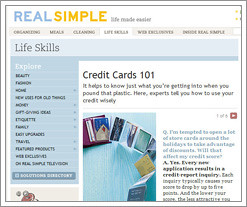
real simple makes life easier with some questions and answers on credit cards by QuizzleTown


internet marketing course

Olympus E-5 professional DSLR announced and previewed: Digital <b>...</b>

Olympus E-5 professional DSLR announced and previewed: Olympus has announced the E-5 professional DSLR, replacing the E-3. Almost three years after launching its predecessor, the company has refreshed its professional flagship to ...

Famed Civil Rights Photographer Ernest Withers Exposed as FBI <b>...</b>

(Sept. 14) -- Civil rights photographer Ernest Withers did double duty as an FBI informant, divulging the most intimate and potentially damaging secrets of his confidants to a government agency then dedicated to discrediting the ...

Hot Air » Good <b>news</b>: Feds spent $18000 to monitor negative media <b>...</b>

Good news: Feds spent $18000 to monitor negative media coverage of BP oil spill.


big white booty

real simple makes life easier with some questions and answers on credit cards by QuizzleTown


Thursday, September 2, 2010

personal finance and budgeting


BillFloat Pays Your Bills When You Can't


If money's tight and you need a little extra time to cover a bill, service BillFloat can take care of it for you and you can pay them back later.

After entering the company you need to pay, you give BillFloat the amount of the bill and your account number. It'll let you know how many days it'll float the bill (a maximum of 30) and how much you'll owe BillFloat—which is generally $5, but decreases with the number of bills you pay. BillFloat will collect a little more information about you, like how you're going to pay them back, and then you'll be all set. Just make sure you'll have the money in a month, since BillFloat won't float its own bills.


  • Daily Dispatch: Navteq works to humanize GPS directions; Skyfire: flash capable iPhone browser submitted to Apple for approval


  • Q&A: Are liquid calcium supplements better?


  • Daily electronics deals


  • Labor Day deals without the legwork


  • Recycle your old rechargeable batteries


  • Apple revamped iPods, iTunes, and more


  • Bad eggs: 10 ways to cut your salmonella risk


  • New Whirlpool plant cooks up some jobs in Tennessee


  • Hurricane Earl: Keep yourself and your food safe


  • Should you buy an all-new car or a proven carry-over car?


forum how to lose weight fast

Democrats Accuse Fox <b>News</b> Of Illegal Support To Ohio Republican <b>...</b>

Democrats allege in a legal filing that, by plugging an Ohio gubernatorial candidate's website in a chyron, Fox News illegally contributed to the Republican's campaign.

Alzheimer&#39;s Trade-off For Mentally Active Seniors - Science <b>News</b>

Stimulation delays cognitive decline, but disease advances quickly once it starts.

Small Business <b>News</b>: Social Media Power!

If you haven't figured it out, gotten on board, jumped on the bandwagon (pick your own expression)...well, we're not going to try to talk you into it. Just be.


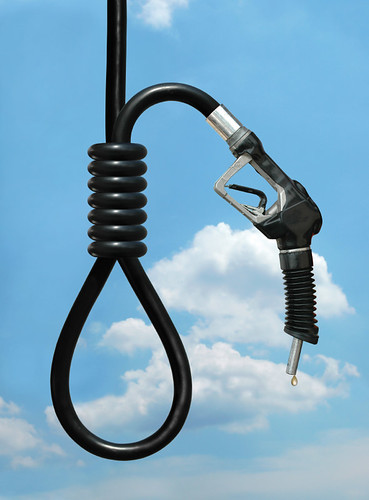
The Cost of Gasoline by hidayat_peje7


Wednesday, September 1, 2010

manage personal finances


Quicken Online users will be able to manually import certain account data into Mint.com by adding Quicken Online as an account in Mint. Quicken also encourages existing customers to export their Quicken Online data as a CSV file for backup purposes. All transaction and account data will be wiped from Intuit's servers beginning on August 29.


One group for whom this transition might be a challenge is the small business users of Quicken Online, who will no longer be able to access the Web component of Quicken's Home & Business product.


Since Mint.com is geared toward personal finance, it does not currently offer a way to differeniate between personal and business transactions. For that, business customers still looking to manage their finances online might want to consider alternatives like InDinero or Outright.


The desktop versions of Quicken's products will not be affected by the change.


Quicken Online users will be able to manually import certain account data into Mint.com by adding Quicken Online as an account in Mint. Quicken also encourages existing customers to export their Quicken Online data as a CSV file for backup purposes. All transaction and account data will be wiped from Intuit's servers beginning on August 29.


One group for whom this transition might be a challenge is the small business users of Quicken Online, who will no longer be able to access the Web component of Quicken's Home & Business product.


Since Mint.com is geared toward personal finance, it does not currently offer a way to differeniate between personal and business transactions. For that, business customers still looking to manage their finances online might want to consider alternatives like InDinero or Outright.


The desktop versions of Quicken's products will not be affected by the change.


xnqujpx

<b>news</b>: Facebook and Twitter Connect, Pingbacks

Of course, news would not be complete without a special gift from Frank. It appears that he neglected to celebrate birthdays this month. So, in the spirit of better late than never, please rip a zippy yippee if you were born in August, ...

<b>News</b> Roundup: Stan Lee to Guest on &#39;Nikita,&#39; NBC Renews &#39;America&#39;s <b>...</b>

Stan Lee, creator of some of the most recognizable comic book superheroes such as Spider-Man, the Fantastic Four and the X-Men, will pop up on.

Michelle Malkin » Great <b>News</b>! More Economic Stimulus on the Way

Great News! More Economic Stimulus on the Way. ... Breaking News: Obamas Having a Great Time on Vacation. August 25, 2010 03:24 PM by Doug Powers. 38 Comments | 1 Trackback � Tennessee Football Coach Says He Was Fired For Recording ...


Wednesday, August 25, 2010

managing your personal finances


penis extender reviews

National Journal Hires Major Garrett From Fox <b>News</b> - NYTimes.com

Major Garrett, the chief White House correspondent for Fox News, is quitting his job at the cable news channel after eight years. He is joining National Journal as a Congressional correspondent.

Health 2.0 <b>News</b>: From Space Food to Eye Tracking and Hospital <b>...</b>

Comments». 1. Health 2.0 News: From Space Food to Eye Tracking and Hospital … | Scott Ashjian News - August 25, 2010. the original here: Health 2.0 News: From Space Food to Eye Tracking and Hospital … Comments ...

CBS Evening <b>News</b> Ratings Tie 20-Year Low - NYTimes.com

The "CBS Evening News" recorded its lowest total viewer rating in nearly 20 years last week.


Friday, August 6, 2010

personal finance


A Frugal Fact: The 6 Most Valuable Grocery Store Products Known to Man [Len Penzo] "Here is my official list of the six most valuable grocery store products - along with a partial list of their many uses."

How to Save Money While Traveling [Get Rich Slowly] "Here are some easy ways to save while traveling."

Shopper's guide to used-car bargains [MSN Money] "Good deals are harder to find now, but the right strategies can help you get the most for your money."

Secrets of extreme savers [CNN Money] "You can put away a lot more than the average American without living a deprived life."

To retire comfortably, under-40 workers need to seriously bulk up savings [Washington Post] "I am going to try to scare some sense into you with three words about life in retirement: The paychecks stop."

— FREE MONEY FINANCE


Add Barriers to Your Savings Account to Protect Yourself from Impulsive Spending


There's nothing wrong with dipping into your savings account when you need to, but if you're prone to doing it a bit too often, using certain kinds of accounts can help deter you from going to them more than necessary.

Photo by Jeff Belmonte.


You can never understate the importance of budgeting, but it can be difficult when you have just one giant pile of money stashed away in a savings account. Personal finance blog Wise Bread recommends a few different types of accounts to deter you:


For short-term, emergency-fund type savings, I recommend a high-yield online savings account. It should be one that's not directly attached to your checking account, a debit card, or an ATM. That way you can't get to the money easily.


And because transfers to and from online savings accounts typically take a few days, you'll be less likely to reach into those funds for a splurge. I've found that the three to five day window really helps me to stay away from those funds. Yet, the savings account is still flexible enough to help you if you lost your job, or had a medical emergency that would require the use of the funds.


Using a high-yield savings account is good for short-term savings, since it merely makes it more difficult to get your money. For longer-term savings, however, they recommend more aggressive barriers, like a retirement account that deducts tax savings if you draw from it before retiring. These barriers may not be necessary for everyone, but if you find that impulsiveness is more a danger to your savings than anything else, it's a good way to keep yourself on track. Hit the link to read more, and share your strategies in the comments.


penis extender

Virtual Economics Winner during Teaching Personal Finance Workshop at WRLC 2008 Conference by Council for Economic Education


A Frugal Fact: The 6 Most Valuable Grocery Store Products Known to Man [Len Penzo] "Here is my official list of the six most valuable grocery store products - along with a partial list of their many uses."

How to Save Money While Traveling [Get Rich Slowly] "Here are some easy ways to save while traveling."

Shopper's guide to used-car bargains [MSN Money] "Good deals are harder to find now, but the right strategies can help you get the most for your money."

Secrets of extreme savers [CNN Money] "You can put away a lot more than the average American without living a deprived life."

To retire comfortably, under-40 workers need to seriously bulk up savings [Washington Post] "I am going to try to scare some sense into you with three words about life in retirement: The paychecks stop."

— FREE MONEY FINANCE


Add Barriers to Your Savings Account to Protect Yourself from Impulsive Spending


There's nothing wrong with dipping into your savings account when you need to, but if you're prone to doing it a bit too often, using certain kinds of accounts can help deter you from going to them more than necessary.

Photo by Jeff Belmonte.


You can never understate the importance of budgeting, but it can be difficult when you have just one giant pile of money stashed away in a savings account. Personal finance blog Wise Bread recommends a few different types of accounts to deter you:


For short-term, emergency-fund type savings, I recommend a high-yield online savings account. It should be one that's not directly attached to your checking account, a debit card, or an ATM. That way you can't get to the money easily.


And because transfers to and from online savings accounts typically take a few days, you'll be less likely to reach into those funds for a splurge. I've found that the three to five day window really helps me to stay away from those funds. Yet, the savings account is still flexible enough to help you if you lost your job, or had a medical emergency that would require the use of the funds.


Using a high-yield savings account is good for short-term savings, since it merely makes it more difficult to get your money. For longer-term savings, however, they recommend more aggressive barriers, like a retirement account that deducts tax savings if you draw from it before retiring. These barriers may not be necessary for everyone, but if you find that impulsiveness is more a danger to your savings than anything else, it's a good way to keep yourself on track. Hit the link to read more, and share your strategies in the comments.


online stock trading online stock trading how to lose weight fast

Exclusive: Fujifilm&#39;s phase detection system explained: Digital <b>...</b>

Exclusive: Fujifilm's phase detection system explained: With the announcement of the Fujifilm F300 EXR and Z800 EXR coming on a day that also saw four other cameras being launched, it would be easy to overlook their most radical feature ...

Introducing the CNET <b>News</b> iPhone app | Digital Media - CNET <b>News</b>

We know you've been clamoring for an official CNET News iPhone app, and we're happy to let you know it's finally here. Read all about what it does and why you should download it. Read this blog post by Josh Lowensohn on Digital Media.

Small Business <b>News</b>: The Online Entrepreneur | Small Business <b>News</b> <b>...</b>

Planning a new small business? You may want to consider doing it online. In this small business news roundup, we look at a variety of tools and tips for.


Virtual Economics Winner during Teaching Personal Finance Workshop at WRLC 2008 Conference by Council for Economic Education


big white booty


Thursday, August 5, 2010

personal finance money management


photo: Ben Atkin


According to Techcrunch, since the iPad’s release in April the number of iPad apps has grown to over 10,000. That is still dwarfed by the iPhone’s library of 200,000 apps — and growing — but is still pretty impressive for just a few months on the market.


Since the iPad is still in its infant stages, the app store is relatively light on apps with a specific personal finance focus: most still focus on the gaming and reading niches. (Apple, however, says that almost all of its 200,000 iPhone apps are compatible with the iPad, including the Mint.com mobile app. You could also revisit Mint’s list of the top personal finance apps, published back in February. Alternatively, take a look at Apple’s list of money management iPhone apps.)


Still, we were recently able to find seven iPad apps that, if not directly related to personal finance management, at the very least help you find savings in everyday life situations and, as a result, manage your money more successfully.


Staying true to the Mint money-saving spirit, all but one of the apps are free to download (the other costs only $1.99), and none require a subscription.


Zillow – Free


Zillow has established itself as a great starting point for anyone interested in buying or selling a home. You can search by city or zip, find all homes for sale in the area of your interest, as well as comparable home sales. Once you’ve found a home you’re interested in, you can check out what that home sold for in the past and its estimated value, or “Zestimate.” Why does it make a great mobile app? Because it enables you to take your home search on the road with you: once you hunt down homes you are interested in, you can see them in person, and then take a peak at photos taken from inside the home.


Epicurious – Free


The iPad app from Epicurious.com includes over 28,000 tested recipes from magazines such as Bon Appétit and Gourmet, popular cookbooks, top chefs, and leading restaurants. And the iPad size makes it a great fit as a digital cookbook. What makes it a great personal finance app? Cooking at home is a much cheaper and healthier alternative to eating out!


Grocery IQ – Free


GroceryIQ is a mobile app that allows you to make grocery lists, sync and share them with others (so both you and your significant other don’t come home with a gallon of sauerkraut on the same night), scan barcodes, and even find and send coupons right to your loyalty card. Having a consistent grocery list for each store you shop at is a fail-safe way to keep your grocery expenses down.


Bloomberg – Free


If you like keeping up with your portfolio and business news throughout the day, Bloomberg offers a great iPad app to help you do so. The app offers customized news, stock quotes, company descriptions, market leaders/laggers, price charts, market trends analysis, and more.


Trapster – Free


Trapster has over 7 million users who provide information on speed traps, video enforced speed zones, and police check points. Now, we’re not saying you should recklessly speed around with your Trapster app spitting warnings at you. But most of us have been caught slightly over the speed limit at times, just because we weren’t familiar enough with a given area to be on our guard. Just don’t get caught paying too much attention to Trapster while you’re driving around (that kind of defeats the purpose of the app).


Kayak – Free


The Kayak iPad app, in itself, doesn’t offer any groundbreaking new functionality above the iPhone app or Kayak website. However, Kayak offers such a great airfare comparison interface and with the vibrant large-screen iPad display, it packs even more punch onto one screen.


Compoundee HD – Compound Interest Calculator – $1.99


Compoundee HD is a basic, easy-to-use financial calculator that is able to calculate 5 different investment variables on compound interest calculations at a daily, weekly, quarterly, semi-annual, or annual level. You can find out how much an investment will be worth over a period of time and the calculation over email. This app could be extremely useful for real-estate agents and brokers, bankers, and mortgage brokers.


Which iPad personal finance apps make your “best of” list?

GE Miller discusses personal finance topics for young professionals at 20somethingfinance.com.


IT, startups, Finance


Innovating Where Banks Won’t: Talking with Rich Aberman About WePay’s Vision for Group Payments


Wade Roush 7/8/10

It’s too bad the economic collapse of 2008-2009 gave “financial innovation” a bad name, because the online banking and payments sector could actually use a lot more of it. When’s the last time your bank’s website surprised you with a cool new feature or service? For that matter, when’s the last time PayPal rolled out any fundamentally new features or user-interface improvements? Once financial organizations grow to a certain size, it seems, they often stop dreaming about cool new ways to serve customers better.


But that actually turns out to be a good thing for startup entrepreneurs, who have been busy filling the gaps in online money management with services like Mint, acquired by Intuit last fall, and now WePay.


The Palo Alto, CA-based startup emerged last fall from investor Paul Graham’s Y Combinator startup school, with a plan to change the way groups of people pay for things. Born in Boston from the world of its co-founders, recent Boston College alums Rich Aberman and Bill Clerico, it started out as a way to do things like collect frat house dues or pool contributions for a bachelor party. But it’s already grown into something much broader, with some customers using it to round up homeowners’ association payments and others using it to collect donations for humanitarian causes. Couples are even using WePay to set up funds for date expenses without having to take the more deeply fraught step of opening a joint bank account.


“What really made us say, ‘Wow, we should do this’ was my brother’s bachelor party,” says Aberman. “I was collecting a couple of hundred bucks per person from 14 people, and track who had paid what, and I realized that there was a very specific need that PayPal wasn’t addressing…They do a good job of helping people sell things online, but I don’t think they do a good job helping people collect money from other people, particularly in large groups.”


WePay, which opened to the general public in late March, provides the coordinators of group payments with online accounts separate from their personal bank accounts. They can spend the money in the accounts using WePay debit cards or by writing paper checks. All members of a group can monitor that account’s activity, ensuring transparency and accountability. The system can also be used to send group members automated reminders that payments are due—in other words, bills.


Opening an account with WePay is free. The startup makes money by charging groups a small transaction fee that’s added to each bill or deducted from each payment. That’s the same way PayPal profits, and it’s a sufficiently convincing business model to have attracted $1.65 million in funding from August Capital and a group of angel investors that includes PayPal alumni Max Levchin and Dave McClure, former Googler Paul Buchheit, Swipely founder Angus Davis, and “super-angel” Ron Conway.


John Chory, an attorney at Boston-based Wilmer Hale, was an early adviser to Aberman and Clerico, before they entered Y Combinator. He argues that it took a pair of twenty-somethings—members of the Facebook generation—to invent something like WePay. “Rich and Bill are two very smart and very motivated entrepreneurs who recognized a problem in their own life and set out to solve it with WePay,” says Chory. “They are representative of the next generation—tech-savvy people who stay connected with technology 24 hours a day and who are comfortable keeping their friends apprised of their activities. I have a feeling they will keep solving problems for many years to come.”


The 8-person startup is “aggressively hiring” software engineers to solve those problems, Aberman told me during a long phone conversation. I’ve excerpted the most interesting parts of that talk below.


Xconomy: How did you and Bill Clerico end up co-founding WePay, and what was your path into Y Combinator?


Rich Aberman: Bill and I went to school together at Boston College, both on the same scholarship, and ended up rooming together freshman year and again junior year. We started a business together in college selling taxi advertising in Hong Kong. I was interning there for a telecom company and Bill had a software internship at Goldman Sachs. It wasn’t really a scalable, disruptive business, but it gave us an opportunity to work together and fall in love with entrepreneurship. We could have run it really effectively, but we both decided to come back to school. We weren’t quite ready to drop out.


I came out to the Bay Area after graduation to work at a Web development and video production startup for about six months, then I applied to NYU Law School and got in on a full ride. I was supposed to matriculate in the fall of 2008. Bill took a job out of school with a boutique investment bank out in Waltham.


About a year after graduating, and a couple of months before law school was going to start, we started incubating this idea. Bill predicted the impending collapse of the …Next Page »


Wade Roush is Xconomy's chief correspondent and editor of Xconomy San Francisco. You can e-mail him at wroush@xconomy.com, call him at 415-796-3024, or follow him on Twitter at twitter.com/wroush.


penis extender

Free Personal Finance Software, Budget Software, Online Money Management and Budget Planner - Mint.com_1265807314614 by design is love


Friday, July 30, 2010

personal finance manager


penis enlargement

NYT Blogger Who Knocked Fox <b>News</b>&#39; Audience Diversity Has the Same <b>...</b>

This of course, played into the "Fox is racist" meme, and, not surprisingly, Stelter's words were re-Tweeted many times (and also inspired several media blogs to further discuss Fox News' lack of diversity). ...

Malaysian politician charged with graft - Arab <b>News</b>

At no time will Arab News attempt to alter the core meaning of a comment. 3. Reject the message, edit the message when the moderators judge it to be a personal attack, defamatory (or potentially defamatory), abusive, incite hatred or ...

<b>News</b> Quiz | July 30, 2010 - The Learning Network Blog - NYTimes.com

See what you know about the news of the day. ... A 'View' of Obama. 6 Q's About the News | Why do you think the president decided to appear on "The View"? A guest post by our college intern, Carrie Montgomery. July 30 ...


Alaska's Sarah Palin, Sidewalk Art by NineInchNachosIV


internet marketing course

NYT Blogger Who Knocked Fox <b>News</b>&#39; Audience Diversity Has the Same <b>...</b>

This of course, played into the "Fox is racist" meme, and, not surprisingly, Stelter's words were re-Tweeted many times (and also inspired several media blogs to further discuss Fox News' lack of diversity). ...

Malaysian politician charged with graft - Arab <b>News</b>

At no time will Arab News attempt to alter the core meaning of a comment. 3. Reject the message, edit the message when the moderators judge it to be a personal attack, defamatory (or potentially defamatory), abusive, incite hatred or ...

<b>News</b> Quiz | July 30, 2010 - The Learning Network Blog - NYTimes.com

See what you know about the news of the day. ... A 'View' of Obama. 6 Q's About the News | Why do you think the president decided to appear on "The View"? A guest post by our college intern, Carrie Montgomery. July 30 ...


big white booty

Alaska's Sarah Palin, Sidewalk Art by NineInchNachosIV


Thursday, July 22, 2010

personal financeonline personal finance


penis enlargement

EXCLUSIVE: Brad Pitt To Star In &#39;World War Z,&#39; Paramount Options <b>...</b>

While chatting up "World War Z" author Max Brooks at the booth for comic publisher Avatar Press, the writer confirmed to MTV News that the adaption of his novel about the zombie apocalypse is not only moving forward, but Brad Pitt is ...

Website users give BBC <b>News</b> redesign grief (and anger, and <b>...</b>

Josh Halliday: The BBC News website aims to engage with its users – who are leaving thousands of complaints – as its new look beds in.

Tina Dupuy: Of Junk Food and Junk <b>News</b>

Watch your average for-profit 24-hour station for one hour. It's all high-fructose hyperbole all the time.


internet marketing course

EXCLUSIVE: Brad Pitt To Star In &#39;World War Z,&#39; Paramount Options <b>...</b>

While chatting up "World War Z" author Max Brooks at the booth for comic publisher Avatar Press, the writer confirmed to MTV News that the adaption of his novel about the zombie apocalypse is not only moving forward, but Brad Pitt is ...

Website users give BBC <b>News</b> redesign grief (and anger, and <b>...</b>

Josh Halliday: The BBC News website aims to engage with its users – who are leaving thousands of complaints – as its new look beds in.

Tina Dupuy: Of Junk Food and Junk <b>News</b>

Watch your average for-profit 24-hour station for one hour. It's all high-fructose hyperbole all the time.


big white booty


Wednesday, July 21, 2010

personal finance money management


59 Responses to “Corporate America’s Pile-O-Cash”


  1. Barry Ritholtz Says:


    July 12th, 2010 at 6:16 am

    Thank you Invictus — thought provoking stuff .


  2. Sonic Charmer Says:


    July 12th, 2010 at 6:38 am

    Is it possible that you’re setting up a distinction without a difference?


    Business leaders say they’re not spending due to economic/political uncertainty. You’re saying No, it’s the lack of aggregate demand!


    Could not the latter be related to, indeed go hand in hand with, the former?


  3. dougc Says:


    July 12th, 2010 at 7:06 am

    I agree 100%, to paraphrase someone “don’t waste a crisis, they should be used to promote your agenda”, obviously CEO’ s want their taxes to remain low. Corporations don’t expand their business based upon the marginal rates or capital gain taxes on employees. they expand to meet needs. Rich people have a habit of claiming all problems can be solved by lower tax rates, Rational people look at the results of Boy Bush and Clinton on employment gains and deficits and see the results of lowering tax rates.


  4. KentWillard Says:


    July 12th, 2010 at 7:20 am

    Factory utilization is still low. House vacancies are high. Commercial real estate vacancies are high. Consumer debt to income is high. And the high dollar will slow US exports. Why on earth would most US businesses want to invest in labor, real estate, or capital equipment I’m such an environment? It has nothing to do with political perception and everything to do with economic reality.


    It is also frighteningly like Japan of the past two decades. Low interest rates. Private debt replaced by public debt. A series of plunges in equity and real estate prices. Firms saving massive amounts of money and hiring temp rather than full time permanent employees. And years of deflation.


  5. Mike in Nola Says:


    July 12th, 2010 at 7:35 am

    The fact that consumer spending is 70% of GDP is one of out biggest problems. That was being propped up by unproductive activity in the housing bubble and by the big spenders who make money trading pieces of paper.


    R&D and plant improvements are neglected to please CNBC readers who are trained to react to a one cent surprise in earnings even when it comes at the cost of five cents next year because the company laid off key people to make those earnings.


    An example of the opposite thinking I heard about yesterday was MSFT’s xbox. It gets no respect because it spends huge amounts on R&D, with not everything making money, but some making long term big money. MS spent several billion developing and marketing the xbox for the past five years, always losing money on it. Many, including me, thought they were crazy. Well, it appears that the income stream for that one product has risen to over $1B this year and will likely grow more and have a fairly long tail, resulting in substantial future profits that would not have occured without the initial investment.


    We have no long-term way out of this trap without starting to actually make things again instead of trading goods and services around, with the goods coming from outside the US.


  6. rktbrkr Says:


    July 12th, 2010 at 7:44 am

    Maybe because US is so weighted towards services and it’s the Chinese who make the capital investments to build stuff to fill Walmart. Maybe US corps are keeping their powder dry because they anticipate more hard times ahead – not profligate like individuals and governments.


    Is there any breakdown of the corporate hoarding by business type? I’m thinking big oil and the big tech cos are sitting on a lot of this money


  7. antisthenes Says:


    July 12th, 2010 at 7:48 am

    For a man so proud of his ability to rationalise, you certainly do fall for some terrible old tautologies and fallacies when you get all macroeconomic on us.


    Sure, PCE is ~70% of GDP – -but only because GDP is largely defined to capture end consumption in the first place! That’s like saying 50% of the clothing I put on my feet are socks, so the rest of my wardrobe is irrelevant!


    If you compare the $10 trillion or so personal expenditure number (actually a meaningful amount lower if we throw out fantasy-land ‘imputations’ and stick to cold, hard cash components) with ALL the other spending that goes on in the economy you’ll find it comes to less than 30% of the sum, the difference being all those highly critical – and highly DISCRETIONARY – business outlays that get cancelled out of the GDP but which are responsible for moving all the goods and services up and down a multi-layered, divided-labour, specialized-function, ADVANCED economy – and generating all the non-government out-of-thin-air revenues and incomes which will be used to buy them.


    Not only is Biz spending not just the NET inventory adds and NET investment which the BLS & BEA fixate upon, but all the other cost-of-sales and SG&A stuff (which a business analayst, above all people, should be aware exists!).


    In here is where you find the real variability in the economy, with most of the rest being no more than its distant – and often muted – echo.


    Come on, BR, use that penetrating intellect of yours and stop parroting Mainstream Macro 101 to your readers, they deserve better.


  8. HEHEHE Says:


    July 12th, 2010 at 7:49 am

    The more realistic presumption is that corp insiders know we are headed for another downturn and they will need that cash to operate. Nobody with a half a brain believes in this “recovery”. Why do you think they’ve been dumping shares into the stock market rally like fishermen bailing water out of a boat with a hole in it? They aren’t stupid. In the next year look for another collapse like in 2008. The cash on those balance sheets will be eaten through; you’ll have another stock market collapse or two; and Benny Bernanke will annouce QE II which will result in another stock market rally and a another round of secondary stock offerings by corps and ensuing amazement by addle brained political pundits at the amount of cash on corporation balance sheets.


    Did I miss anything?


  9. HEHEHE Says:


    July 12th, 2010 at 7:55 am

    And you wonder why they never caught Madoff:)


    “Hundreds of Federal Agents Fall Victim to Ponzi Scheme”


    http://www.aolnews.com/crime/article/hundreds-of-fbi-dea-and-ice-agents-fall-victim-to-ponzi-scheme/19547371


  10. dead hobo Says:


    July 12th, 2010 at 8:07 am

    Invictus,


    You nailed it. I can’t improve or criticize this piece.


    The next logical step would be to write about why demand is low, especially in spite of numerous gimmicks to inflate demand using public money, due to costs for commodities being likely overstated due to excess speculative demand and inept regulation, due to an utter lack of credibility that our financial markets have even a shred oh honesty and thus are safe to put personal savings into, or due to incompetent Fed management that prefers to ostensibly ignore credit availability for small business so that large banks can manage prop desks instead.


  11. stonedwino Says:


    July 12th, 2010 at 8:09 am

    Doesn’t anyone see the connection here?


    Consumers are supposed to be 70% of the economy and spending, but the consumer can’t make ends meet; meanwhile corporate America with its lowest effective corporate tax rate at levels not seen since the 1950’s is hoarding $1.8 trillion dollars? Like I’ve mentioned before, we cannot have an economic recovery when the consumer is being squeezed on all sides while corporate America sits on hoards of cash that is not being used to re-invigorate the economy. We are not Japan, we are much worse….This does not look good for the country, capitalism or business….we have come to a point where the imbalances must be corrected and if the need be through higher taxation of those sitting on all those piles of cash…


  12. Mike in Nola Says:


    July 12th, 2010 at 8:09 am

    Hussman has a good rant about the misallocation of resources and the earnings games in the second half of today’s comment:


    http://www.hussmanfunds.com/wmc/wmc100712.htm


  13. Mike in Nola Says:


    July 12th, 2010 at 8:12 am

    Can’t even listen to Bloomberg radio. Feldstein is on telling us how we need to keep tax cuts for “everyone, ” i.e. the rich. It’s a “big cloud” hanging over “us.” Funny that taxes on the rich are always described as being on small businesses.


  14. jaywalker Says:


    July 12th, 2010 at 8:30 am

    Thank God someone is still able to think. While whispered sentiments make good headlines, they don’t make good analysis; thank you for swimming above the toxic political pool that seems to infect so much of today’s “analysis”.


    Jay Walker

    The Confused Capitalist


  15. Mark Down Says:


    July 12th, 2010 at 8:38 am

    Sitting on piles of cash..The new Preparation C.


  16. dead hobo Says:


    July 12th, 2010 at 8:39 am

    BTW, it’s not only corporations that are sitting on piles of cash. My stash might not be as large as the ones you are writing about above, but it is certainly significant to me.


    My personal goal is to live as comfortably as possible without excessive spending, even when I can afford to buy something new or fun. It really takes a full mental reorientation to think on these terms. I don’t deny myself the things I regard as necessities, which would probably look like luxuries to some others. Rather, I constantly look at my life and try to identify where to save a few bucks. In other words, I have replaced a fine hobby of recreational spending and shopping with being frugal. My house is paid for. I don’t owe anyone a dime outside of current balances that are cleared monthly.


    Hunkering down is the only logical course of action. The government is incompetent at regulating financial markets and has created a place where the laws favor the crooks. I’m not putting any savings there unless we have another millennial dip. All it takes is a whining banker to scare Uncle Stupid into making the financial markets a better and safer place for fraudsters to operate without fear. Incompetent economists and business media that often performs as free public relations for commissioned wall street touts assist by being ignorant, stupid, complicit, corrupt, and useless in uncountable ways. In spite of all who complain, this will never change.


    I have no faith in government to do what it should be doing … making the markets safe for investors. They have degenerated into a crook’s and scammer’s paradise and will likely remain as such for many years to come.


  17. dead hobo Says:


    July 12th, 2010 at 8:40 am

    Mark Down Says:

    July 12th, 2010 at 8:38 am


    Sitting on piles of cash..The new Preparation C.


    reply:

    ————-

    Cute, Things I wish I said.


  18. Minderbender Says:


    July 12th, 2010 at 8:40 am

    Two points to complete the picture:


    1) Why is demand low? Uncertainty also on demand side (both consumers and businesses)


    2) Creative Destruction – much of the capacity will never be utilized, as the products that can be produced today will no longer be in demand tomorrow – the new capex spending ought to be the kind of investment for new, different, innovative products


  19. JusTryinTaMakeIt Says:


    July 12th, 2010 at 8:41 am

    Excellent analysis. Meanwhile Judd(R), Cantor(R), and Bayh(D) are all on CNBC this morning, spouting the Republican talking points that business is not growing, because of all the “harsh” measures the Obama admin is imposing on business. Oh, I think Sarah is also part of that chorus!


  20. The Curmudgeon Says:


    July 12th, 2010 at 8:57 am

    The political screeching on both sides is just white noise, even if Obama pretty clearly believes that government provides better solutions than markets. And so do his GOP opponents, no matter what bull they try to sell otherwise.


    The reason corps are sitting on piles of cash is because a) collapse of consumer demand; b) there’s nothing else to do with it; c) deflationary environment means cash is king.


    Is there a political solution to the problem? I doubt it, short of a major war to suck up/destroy excess product. Of course, you could just start bulldozing houses.


  21. tenaciousd Says:


    July 12th, 2010 at 8:59 am

    “… take with a grain of salt what anonymous CEOs whisper into the ear of one of their stenographers.”


    Ouch!


  22. Greg0658 Says:


    July 12th, 2010 at 8:59 am

    a 20 year plan to buy at pennies on the dollar .. or is it .. the 50 year plan – 1.5T dollar man reconstruction – we can build it better than it was before – no insurance dollars spent * – start from near scratch – a 22nd century infrastructure


    * na – it’s monday


  23. constantnormal Says:


    July 12th, 2010 at 9:10 am

    I’m thinking about the charts in the recent Comstock Partners chartfest that show corporate debt rising to huge levels, and just beginning to fall back …


    So on the one hand, we have a huge corporate indebtedness, while at the same time we see companies raising record amounts of cash … does it seem to you that there is a certain lack of balance, a certain excess of individuality, a prevalence of “every company is an island” sort of thinking?


    If an “economy” is an assortment of people and companies working individually toward better futures for all, what happens when that dissolves into “me first, devil take the hindmost”?


  24. JustinTheSkeptic Says:


    July 12th, 2010 at 9:19 am

    Tell them dam chinese making 90 cents an hour to come off their doe and spend it on American ingenuity! lol


  25. constantnormal Says:


    July 12th, 2010 at 9:55 am

    Restore FASB 157, value worthless debts as worthless, and all this will unravel. The bankrupt will be wiped out, and the solvent companies will remain, and begin deploying their cash hoard in acquiring shards of bankrupt monsters for less than the cost to create similar functionality. The financial sector will shrink from its cancerous size and the economy will be in remission from financial cancer.


    Yes, it will be painful, and there is the chance that the patient may not survive the cure. But OTOH, there is a certainty that the patient will not survive the disease.


  26. DeDude Says:


    July 12th, 2010 at 10:26 am

    Amazing how many people fail to understand the simple logic of business investment. If there are costumers to purchase the products then the business will invest and expand and if there are no costumers to purchase the product then they will not expand. The few companies that were run by “if we make it they (costumers) will come” idiots have long ago failed. The reason companies are not deploying their cash into expanding is that the consumer is not doing so well (unemployment, pay cuts, no overtime, etc.). But they may as well take a stab at the only president in recent times that was not a complete slave to the corporations.


  27. Bokolis Says:


    July 12th, 2010 at 10:38 am

    “The demand problem we have on our hands is what is keeping companies’ spigots closed.”


    How, then, does demand get stimulated without putting money in the hands of consumers?


    Right…the problem does not lie in a cyclical slowdown of corporate spending/cash hoarding. The larger issue is that, for ages, it seems as if the corporate infrastructure spending is focused on decreasing headcount costs and squeezing more out of the remaining headcount.


    I don’t see technology improving to (my) satisfaction. But, no one with the talent to push technology would be caught dead working for (from BR’s follow-up) “Exxon Mobil, GE, Microsoft, Apple, Google, Cisco, Johnson & Johnson, Verizon, Altria, EMC, Disney, Oracle,” would they?


    Though, I wish one of them would go to work for Oracle…if only to build a product that isn’t shyte so I can get work done more quickly (giving me more time to fcuk off on here…I don’t want to show my hand regarding the upper limits of my productivity capability).


  28. Tony61 Says:


    July 12th, 2010 at 10:44 am

    Yeoman’s work, BR. I heard Zakaria prattling on and on… and turned it off in disgust. When our thought leaders cannot think, it’s no wonder tea partiers cannot understand. Thank you for scrounging up all the charts and tables.


    BTW, just finished Bailout Nation– excellent. I had to wait several months for my own mental health to read all the nightmarish details, but it is well worth it.


  29. Invictus Says:


    July 12th, 2010 at 10:50 am

    @Tony61


    Credit where it’s due, my friend. Check the byline, please. I’d like to think I bring something to the party…


    Invictus


  30. TDL Says:


    July 12th, 2010 at 11:07 am

    DeDude,

    I’m pretty sure customers weren’t demanding electricity in their home before Edison effectively harnessed it. Sure, they would look for better ways to heat and light their homes, but at the end of the day if something is not built (created, innovated, invented, etc.) it will not be demanded. Your point is awfully simplistic.


    Invictus,

    You missed a critical point. Consumers are slowing the spending because debt loads are too high. Debt has to be extinguished before spending picks up. Then again, if you take the Krugman approach, the most effective way to deal with debt is accumulate more debt (at least at the national level;) then a recovery will kick in and you will be able to deal with the debt because the economy will be growing again! At least that’s what the neo-Keynsians say.


    Regards,

    TDL


  31. plantseeds Says:


    July 12th, 2010 at 11:11 am

    constantnormal said..


    “Restore FASB 157, value worthless debts as worthless, and all this will unravel. The bankrupt will be wiped out, and the solvent companies will remain, and begin deploying their cash hoard in acquiring shards of bankrupt monsters for less than the cost to create similar functionality. The financial sector will shrink from its cancerous size and the economy will be in remission from financial cancer.”


    so true….and that would put an end to the double dip argument for sure and maybe give literal meaning to S&P 500.


    If there was demand, supply and thus investment would soon follow however if CEOs say they’re not investing because of uncertainty coming out of Washington then I suppose it’s possible.


    OTOH if there was a perceived “business friendly” administration and business then started investing as a result, despite lack of demand, would that create demand in the aggregate? Wasn’t that the whole idea of the economic stimulus effort? I’m not sure that works either.


    Bottom line…

    To quote Kevin Spacey in It’s a Bug’s Life, “The first rule of management: Everything is your fault.”


  32. Deborah Says:


    July 12th, 2010 at 11:44 am

    Good post. I can’t stand the garbage conclusions that some people make. When I read the introduction I was going to debate the idiot conclusions of Fareed Zakaria’s with the exact points you raised.


  33. Invictus Says:


    July 12th, 2010 at 11:46 am

    @antisthenes


    With all due respect, how am I to take seriously someone who can’t even read a byline?


  34. gman Says:


    July 12th, 2010 at 12:11 pm

    Great work! Everything in the media is “someone powerful (or the pr agent of a powerful person) whispering in a reporters ear”…think of how people were duped in the lead up to the Iraq war!


  35. wngoju Says:


    July 12th, 2010 at 12:21 pm

    finally read this. agree with, eg, gman. Great!


  36. TDL Says:


    July 12th, 2010 at 12:22 pm

    Invictus,

    antisthenes still has an interesting argument. If I re-post, will you make a counter argument then?


    Regards,

    TDL


  37. steve from virginia Says:


    July 12th, 2010 at 1:00 pm

    In the Potemkin Economy the outlook for financials is bleak due to off- balance sheet ‘difficulties’. Why should non- financials be any different?


    Financials can hold cash @ the Fed and earn some interest (and divert some to executives who hold cash in Antigua- Barbuda, Curacao and Singapore.) Commercials earn almost as much as deflation increases cash value relative to borrowing without the risk. (Cash is diverted to executives who hold cash in Antigua, etc.)


    The fact of the cash holdings is more eloquent than any other aspect. Neither financials or companies expect to produce anything. Financials cannot by nature and companies cannot see any opportunities that cost less than what the market prices can support.


    Money (cash) is now a stock not a flow. The outcome is (self- fulfilling) deflation which is the result/cause of the cash hoarding. Why deflation? Because the ‘tax burden’ to commerce is real energy price which has risen along with consumption. The cash curve tracks the GDP curve which also tracks the oil production curve. All have expanded exponentially since 1980 and Reaganomics and the massive expansion of US credit. Corporate cash represents the capture of some of that credit and its laundering into currency. The currency is a hedge against either the company’s own risk or the systemic risk that depletion- amplified deflation represents to all business.


    The only economic ‘activity’ is acquiring and holding money. With dollars being freely exchangeable on demand for petroleum, there is no alternative to gaining dollars as the primary cost of doing business.


    Of course, at some (deflationary) point holding dollars becomes the sole purpose of the business itself.


    With energy at the basis of all modern economic activity there is only one way for the various curves to bend as oil production declines. You can figure out the rest of this story by yourselves!


  38. pater tenebrarum Says:


    July 12th, 2010 at 1:20 pm

    Unfortunately the so-called ‘regime uncertainty’ is a very real problem, no matter how ‘tired’ Barry is of hearing it. After all, ‘poor sales’ and ‘low capacity utilization’ do not just drop from the sky unbidden, as if they were a natural calamity like a hurricane. The bust is the result of an artificial credit boom imploding, but nonetheless the administration’s massive fiscal deficit spending policy – which makes future equally massive increases in taxation an inevitability – clearly contributes to worsening the bust.

    For more details read:

    Regime Uncertainty http://www.acting-man.com/?p=3820


  39. Monday links: better burgers Abnormal Returns Says:


    July 12th, 2010 at 1:23 pm

    America’s big “pile of cash” is not the source of our economic problems.  (Big Picture,


  40. Brett Tibbitts Says:


    July 12th, 2010 at 1:54 pm

    Don’t you think it’s a little simplistic and naive to state that the reason corporations aren’t opening their wallets is completely due to the demand side?


    Why is it so hard for so many on this site to see that Obama’s initiatives are not conducive to increasing employment in this country? A stimulous bill that is more concerned with keeping state government union jobs than truly benefitting the entire country. A health care bill that is so convoluted that no one will ever figure it out. A finance bill that is the same. All you can really know is that your costs are going up as a business owner.


    Obama is more concerned about suing Arizona than creating jobs. This is his comfort zone.


    And to top it all off, Obama, Pelosi and Reid won’t even tell us what the tax structure will be next year – and ya think this has absolutely nothing to do with corporations’ refusing to open their wallets? Please.


  41. Corporate American’s $2 Tn Cash Pile–Let’s Kill Some Corporate Ass « Phil's Favorites – By Ilene Says:


    July 12th, 2010 at 2:17 pm

    about how much America’s 500 largest NON-FINANCIAL companies have on their books.  This is up about $500,000,000,000 from last year as 2010 has been very, very good for corporate


  42. beaufou Says:


    July 12th, 2010 at 2:19 pm

    Isn’t the notion of a jobless recovery anti-business for those fearless CEOs.

    You would think that decently paid and employed people would boost sales, but by the time we get to any kind of normalcy, they’ll already have learned a lot about “productivity and efficiency” or how to profit a little more from human misery.

    And regulations and taxes are a bunch of cheap bullshit excuses they throw around to hide their disgusting behaviors; try giving more privileges to a bunch of free loading and bottom feeding aristocrats and see what happens, Louis the XVI can testify.

    Politicians and business elites are morally defeated, refusing to even imagine an alternative to their fundamentally flawed ways.


    Nice one Invictus.

    (thanks BR)


  43. DeDude Says:


    July 12th, 2010 at 2:23 pm

    TDL, yes they diverted their money from a petroleum based lights to electricity based light. Businesses can and will always try to improve their products relative to the competition. Those types of investments are still going on and they are fairly unaffected by the economic climate (with the exception of a credit freeze)– because they are essential for the survival of a company (either you or your competitors develop a better product and, therefore, increase market share). So you are making my point; because there are always (more) costumers for a better product ,investments in making a better product are still occurring. The thing that has failed is investment in making more of the current products (new factories to increase production). That will only pick up when consumers start spending more.


  44. impermanence Says:


    July 12th, 2010 at 2:30 pm

    The economy is sort of like a game of monopoly. When one player has almost all the money and all the property, the games is kind of over. The rest of the players can not continue to play until they accumulate enough $ which they can never seem to do because of all the fees, taxes, and other financials pitfalls.


    You always knew when you got to that point in the game when somebody would say, “it’s over.” Well, “it’s over” for real this time.


  45. Market Talk » Blog Archive » Links 7/12/2010 Says:


    July 12th, 2010 at 5:27 pm

    in America,” a recent Washington Post op-ed says. But Big Picture blogger Barry Ritholtz disagrees with that premise. “Since we know that personal consumption expenditures comprise 70% of GDP,


  46. jyc3 Says:


    July 12th, 2010 at 5:54 pm

    Invictus,


    I don’t necessarily disagree but a few questions come to mind:


    1. On the NFIB survey, do we have a breakdown on the types of companies in the survey? For instance, how many of them are in businesses that would benefit from higher capital spending? How many of them are in industries that are related, even peripherally, to real estate? Not knowing the composition of the survey group is a major problem in trying to draw a conclusion from the response. You can’t just assume that they only benefit from consumer spending.


    2. How much of the alleged spare capacity is now obsolete? We know that capacity and therefore capacity utilization is notoriously difficult to measure so I’d be careful depending on that data for anything.


    3. Are you saying that expectations of future policy play no role in the reluctance to spend? If not, how much is due to lack of demand and how much is due to “regime uncertainty” as it has been called elsewhere? If some of the reluctance to spend is due to policy uncertainty (or fear of higher taxes, more regulations, uncertainty about the ultimate cost of hiring a new employee due to implementation of health care reform, etc.) wouldn’t relieving some of that uncertainty be beneficial? Isn’t it possible that relieving that uncertainty would be enough to raise demand enough to get companies to invest?


    4. How much of the change in the rate of cash accumulation can be attributed to globalization and the reluctance of multinationals to repatriate profits and pay taxes? How much of this cash is sitting offshore avoiding taxes?


    I didn’t see the Zakaria piece and won’t read it. I’ve not found his analysis of foreign affairs or anything else particularly compelling. On the other hand just because the CEOs have a vested interest in putting this meme out there doesn’t mean there isn’t some truth to it. Not all industries have excess capacity right now and the ones that do, we might not want to stimulate (do we really want the construction industry expanding right now?). I think we could stimulate with monetary policy but I’m not sure we wouldn’t just get more malinvestment (as the Austrians call it) as we did with real estate the last time we tried that. The economy is not homogeneous and raw demand management may not help that much right now. It takes time for roofers to figure out how to do something else for a living. Having said that, supply side stimulation may not be much help either. It might be that we just need to tough this one out until the debt is paid down. Frankly, I think it would have been quicker if we had forced more defaults and made bank bondholders eat more losses rather than having the taxpayer pick up the tab for their lousy investment decisions. We compressed the amplitude of the recession with all these loss avoidance measures at the cost of extending the wavelength. There is no such thing as a free lunch.


  47. willid3 Says:


    July 12th, 2010 at 5:57 pm

    some how I don’t see that there are more than 2 real consumers. as any business (no matter what they do) either sells to government (or to some one else who does at some point) or to end consumers (or to some one who does). other wise they aren’t really a business. an example is jet engines. no consumer ever buys one do they? but if they don’t buy tickets on airlines, then a lot fewer of them would ever be made, and mostly they would be for military aircraft (bought by government). and air express mail would never have happened with out the airlines, or the post office (aka the government).

    so the real reason for the demand drought is that consumers have been so over whelmed by debt, caused by shrinking incomes, because their pay hasn’t kept up with inflation in a decade, and only easy credit papers over this, in the last decade


  48. mathman Says:


    July 12th, 2010 at 6:21 pm

    This is complete bullshit. The entire global economy is crashing and we all pretend it’s just fine. Anyone who thinks wealth comes from spinning the Wall Street lottery wheel while the Fed backs it up with round the clock printing (to cover the whole fraudulent system up) is delusional. It’s over. Those paper notes you and i have are glorified scrip and will become ever more worthless as time goes on. The entire economic system on which all this supposed wealth derives has a fatal flaw – that the environment from which is obtained all the raw materials for everything we do – has never been factored in to the costs and all too soon we’re going to pay the real price.


  49. beaufou Says:


    July 12th, 2010 at 6:37 pm

    There Invictus, there are more anti-business people in Brussels.


    http://www.eact.eu/

    European Association of Corporate Treasurers


    This fine group of gentlemen are threatening to outsource jobs if derivatives regulations are voted in Europe.

    Apparently regulations would cause the next crisis, just like no regulations didn’t cause the last one.


  50. Invictus Says:


    July 12th, 2010 at 6:56 pm

    @jyc3


    You ask many good, thoughtful questions, and I do not pretend to have all the answers. Not by a longshot (except perhaps to #1, which I could probably get from the NFIB).


    :-)


    My point here was to suggest that the equation: Corporate Cash at Record High = Obama anti-business is a flawed one, and to exhibit as best I could why that is the case. And I hate seeing the media allowing itself to be blatantly used.


  51. Invictus Says:


    July 12th, 2010 at 7:20 pm

    @antisthenes


    Sure, PCE is ~70% of GDP – -but only because GDP is largely defined to capture end consumption in the first place!


    Could you support or elaborate on this? As to the rest of your rebuttal I would, as always, ask for some evidence to support your claims, just as I provided some evidence to support mine.


  52. Invictus Says:


    July 12th, 2010 at 8:12 pm

    @All


    I appreciate the commentary here and the insight both for and against the position I’ve laid out.


    This piece was picked up over at Business Insider, where some of the responses serve to highlight what’s wrong with the discourse in our country today. Herewith three examples of the fact-based, data-driven “responses” to my post:


    There goes Barry shilling for Obama again. According to Barry, everything has been absolutely fabulous since Obama has come into office. I don;t understand why anyone would risk their reputation defending Obama.


    And


    Obama’s radical socialism is the reason I am not spending.


    My personal fave:


    Businesses aren’t spending their cash for two reasons


    1) Fear and uncertainty due to a marxist ‘nationalizer’ acting like a spoiled dictator in the White House.


  53. Sonic Charmer Says:


    July 12th, 2010 at 8:23 pm

    Invictus,


    Far as I could see, you didn’t respond to my question in Comment #1. To rephrase: Why are the two claims ‘businesses aren’t spending due to economic/political uncertainty/instability’ and ‘consumers aren’t demanding’ deemed mutually exclusive? Why is the latter supposed to be some sort of rebuttal to the former?


    To state it explicitly: Couldn’t the reason for the lack of demand among consumers be exactly the same reason business leaders are giving – namely, economic/political uncertainty/instability?


    In what sense does your post and its claim about consumer demand contradict what the business leaders are reported to have said about Obama’s effect on the economic situation?


  54. Invictus Says:


    July 12th, 2010 at 8:46 pm

    @Sonic Charmer


    There’s no way I can see and respond to every comment put up in response to something I post. Just not gonna happen. I do the best I can, but on what Barry pays me it just won’t fly. (Note to BR: We gotta talk raise soon.)


    That said, the answer to your question is, in my opinion, “no.” Consumers are hunkered down — and not “demanding” goods and services — because of the ongoing deleveraging that began several quarters ago and has some time to run. The era of frugality we’ve entered will be with us for some time to come.


    Businesses have been hoarding cash for a while — see the quote in my post from Kevin Warsh from 2006. Was there economic/political uncertainty/instability then? Clearly not, yet liquid asset levels continued to rise.


    Here’s another on-point comment from Richard Eskow’s column at HuffPo: “Here’s the bottom line: Any executive of a publicly-traded company who failed to spend the money needed to serve a ready-to-buy customer base would be violating her or his duty to stockholders and would probably be fired immediately.” In other words, if companies thought they could reap $1.50 by spending $1.00, the floodgates would be open. But they can’t, and that’s not Obama’s fault. The demand just isn’t there.


    One of the very, very few companies that seems to have found a formula to create its own demand is Apple, which I think we’d all agree does an exceptional job at marketing its products, in addition to making products that consumers crave. Beyond that, I just don’t know right now.


  55. philipat Says:


    July 12th, 2010 at 10:08 pm

    So the solution is to get Americans buying useless cr*p from China again? I was sure that this consuption-driven model had been shown to be susopect and unsustainable? Perhaps a little more thrift and better focused investments might actually represent a better way forward?


  56. toddie.g Says:


    July 12th, 2010 at 10:41 pm

    @Impermanence. I think you make a great metaphor using the game of Monopoly to today’s economy. With wealth so concentrated to such a low percentage of the population, unless they invest that wealth in capital formation with abandon then everything just stagnates while all the other monopoly players have nothing.


    By having designed an economy that concentrates wealth at the very top, it leaves a dearth of spending as the super wealthy can only spend so much. As Bud Fox said, “how many yachts can you waterski behind?” If much of the excess wealth isn’t invested in new business, then it just sits idle, adding nothing.


    Another point. I admire Bill Gates’s and Warren Buffett’s great philanthropy, but given the changing times wouldn’t they do the world (and the United States) a whole lot of good by investing some of that money in new businesses, creating jobs and giving opportunity to others, much of it right here at home, than their present initiatives ? The Gates Foundation has very well-meaning initiatives, but they were designed before the economic collapse. I suggest that major philanthropists go back to the drawing board, and come up with some fresh ideas as to how best deploy those funds.


  57. Sonic Charmer Says:


    July 13th, 2010 at 6:26 am

    Thanks for the reply. I recognize one can’t/wouldn’t reply to all comments (or even any, necessarily), yet you seemed active in this thread otherwise, so I thought I’d ask.


    I’m still unclear on how what you’re is meant to be a contradiction of the claim that uncertainty is sidelining capital. You assert that consumers aren’t demanding ‘because of deleveraging’. I tend to agree. You say we are in for frugality for some time to come. I also agree. But if there is uncertainty about the future (including economic and political), this would naturally tend to lengthen the deleveraging period and keep people ‘frugal’ more than otherwise. No?


    It still seems to me that the two phenomena go hand in hand, rather than contradict. So far from being alternative/mutually exclusive explanations of capital ‘hoarding’, actually they could be said to have a common cause, that cause being precisely the one claimed by the unnamed ‘business leaders’ quoted in the article you reference.


    best,


  58. Tony61 Says:


    July 13th, 2010 at 11:37 am

    Invictus– Whoa! Sorry for not reading the by-line. Yes, yeoman’s work on this entry; excellent graphs and charts. Please accept my apologies, but rest assured that to be mistaken for BR is no insult. Thanks again for the useful info.


  59. Corporate Cash Has Been Piling Up Since 1982 | The Big Picture Says:


    July 15th, 2010 at 5:50 am

    want to add to Invictus’ commentary taking Newsweek’s International editor, Fareed Zakaria, to task. There are three facts that I


Leave a Reply


You must be logged in to post a comment.


Stop Equating Monthly Payments with Affordability to Avoid Financial Trouble


Few of us can claim to not be guilty of at least a purchase or two where we said to ourselves "Only X per month? That's not bad at all!" Using the monthly payment to assess affordability, however, is a financial trap.

Photo by ell brown.


With the variety of ways people can acquire credit and spend money these days it's unsurprising that financial mistakes and misfortunes abound. Over at U.S. News & World Report they've put together a list of seven common financial mistakes. Among the mistakes they highlight is seeing the monthly bill as an indicator that something is in your budget.


Equating monthly payments with affordability: Far too many of us decide whether we can afford something based on whether we can manage the monthly payment. This is particularly true for homes, cars, and furniture. But just because we can handle a payment does not mean we can truly afford something. Monthly payments also ignore the true cost of ownership. A car, for example, costs a lot more than the monthly payment when you consider insurance, gas, repairs and maintenance. Instead of focusing on the monthly payment, separate needs from wants and evaluate how you might better use the money. If you still have consumer debt, for example, consider paying the debt off before buying something that will commit you to future monthly payments for potentially years to come.


Shifting your perspective away from "Do I have an extra $200 a month to spend on this thing?" to "Is spending $200 a month plus all the additional expenses on this thing the best use of my money?" will help you channel your money towards more productive uses. Check out the full list of money mistakes at the link below or share your best advice on easily corrected financial choices in the comments below.


online stock trading

Fujifilm unveils F300EXR compact superzoom with Hybrid autofocus <b>...</b>

Fujifilm unveils F300EXR compact superzoom with Hybrid autofocus system: Fujifilm has unveiled the FinePix F300EXR which debuts a new Hybrid autofocus system that the company claims is as fast as that on DSLRs.

Liberal journalists suggest government shut down Fox <b>News</b> | The <b>...</b>

FILE - In this Jan. 22, 2009 file photo, President Barack Obama, center, stands near Fox News' Major Garrett, left, in the kitchen of the Brady press briefing room at the White House in Washington. (AP Photo/Manuel Balce Ceneta) ...

Panasonic officially announces DMC-LX5 premium compact: Digital <b>...</b>

Panasonic officially announces DMC-LX5 premium compact: Panasonic has officially unveiled the DMC-LX5, successor to the popular LX3. The latest model features a revised sensor, longer zoom range and improved control layout without ...


When is it time to switch your banking service by financemetrics